In last-mile delivery, the final few meters matter more than most teams think.
A parcel is not delivered to the middle of a building. It is delivered to a front door, service entrance, gate, loading point, or the best place to stop so the driver can complete the job quickly and correctly. That sounds obvious. But many delivery workflows still rely on generic map data that was not built for this part of the journey.
That gap matters.
Across Europe, last-mile teams are under pressure to cut costs, improve reliability, and meet rising customer expectations. In the latest [Eye on the Last Mile] Europe 2025 report, cost reduction is the top priority, followed by customer experience, reliability, and smarter routing. The report also highlights that route optimisation is now the most adopted AI use case in last-mile delivery, driven by the need to reduce fuel and labour costs without expanding fleet size.
That is exactly why Naurt and ElifTech have partnered.
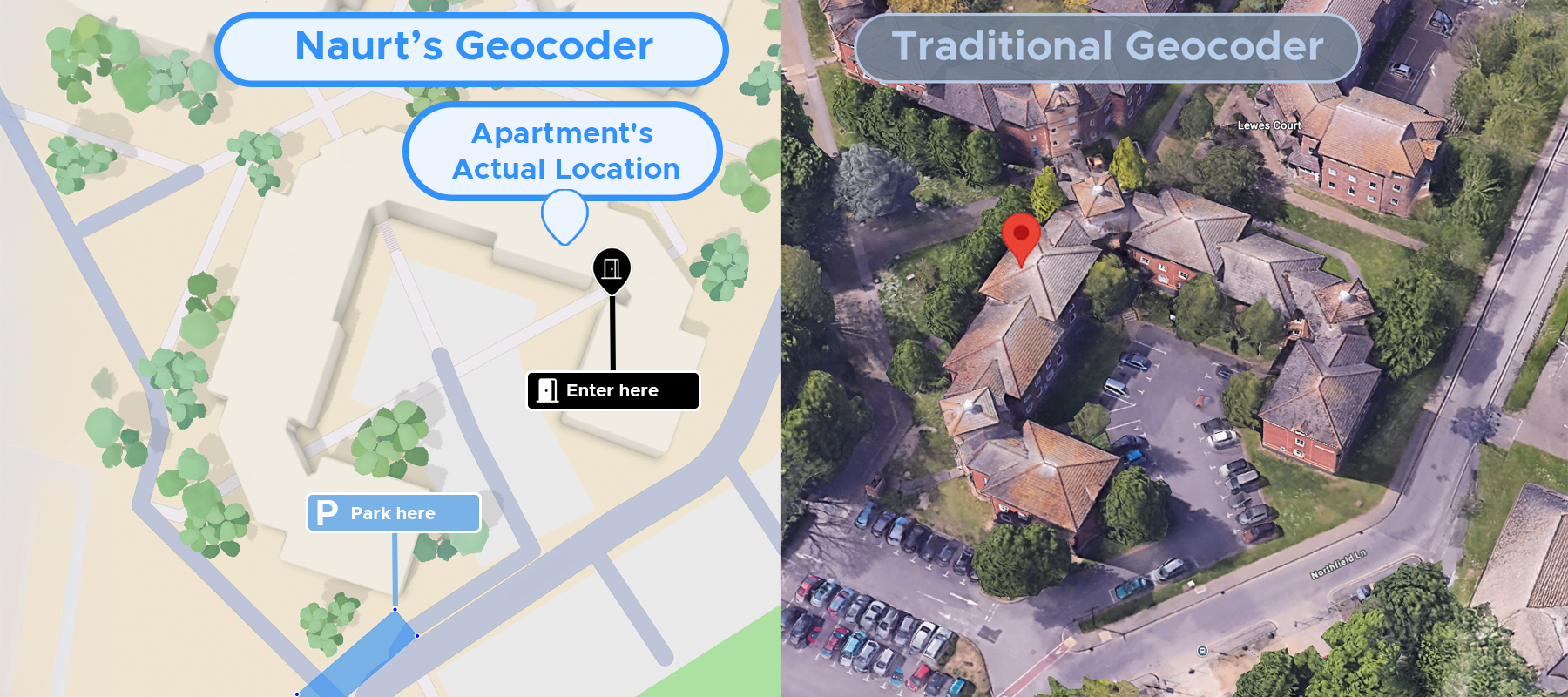
Most geocoders are built for finding an address on a map. That is useful, but it is not the same as helping a courier complete a delivery.
For a delivery team, a point in the centre of a building is often not enough. In real-world operations, the important questions are:
Generic maps often miss these details. When that happens, the result is familiar: extra walking time, failed first attempts, avoidable calls to support, frustrated drivers, and parcels going to the wrong place first time.
The pressure on European delivery operations is clear.
The report shows that rising costs are the biggest last-mile challenge in Europe, with labour and fuel among the main drivers. It also shows that businesses are investing in smarter routing, automation, and better delivery visibility to improve both cost control and customer experience.
That makes the final approach to the property more important than ever.
If a driver loses even a small amount of time on each stop because the map point is wrong, that loss compounds quickly across thousands of deliveries. Small inefficiencies at the address level become real operational cost at route level.
The same report also notes that more than half of customers are concerned about order status because of poor visibility, driving “Where is my order?” contacts and adding service cost. Poor last-mile accuracy does not just affect the driver. It affects support teams, customer trust, and repeat purchase too.
Naurt provides delivery-focused geocoding built around the real-world delivery point.
Instead of stopping at a rooftop or centre-of-building pin, Naurt adds the data couriers actually need, including:
This gives delivery teams a better location for the final approach, not just a better-looking point on a map.
That matters in dense urban areas, flats, gated properties, pedestrian zones, and any route where the wrong side of the building creates wasted time.
ElifTech is an international technology company specializing in custom software development and AI-driven solutions for logistics and supply chain businesses. Its work supports transportation management, route optimization, tracking, reporting, warehouse systems, and broader operational efficiency.
As logistics continues to evolve, companies need more than just freight management. They need technology partners who understand how operations, systems, communication, visibility, and execution work together across the full delivery flow.
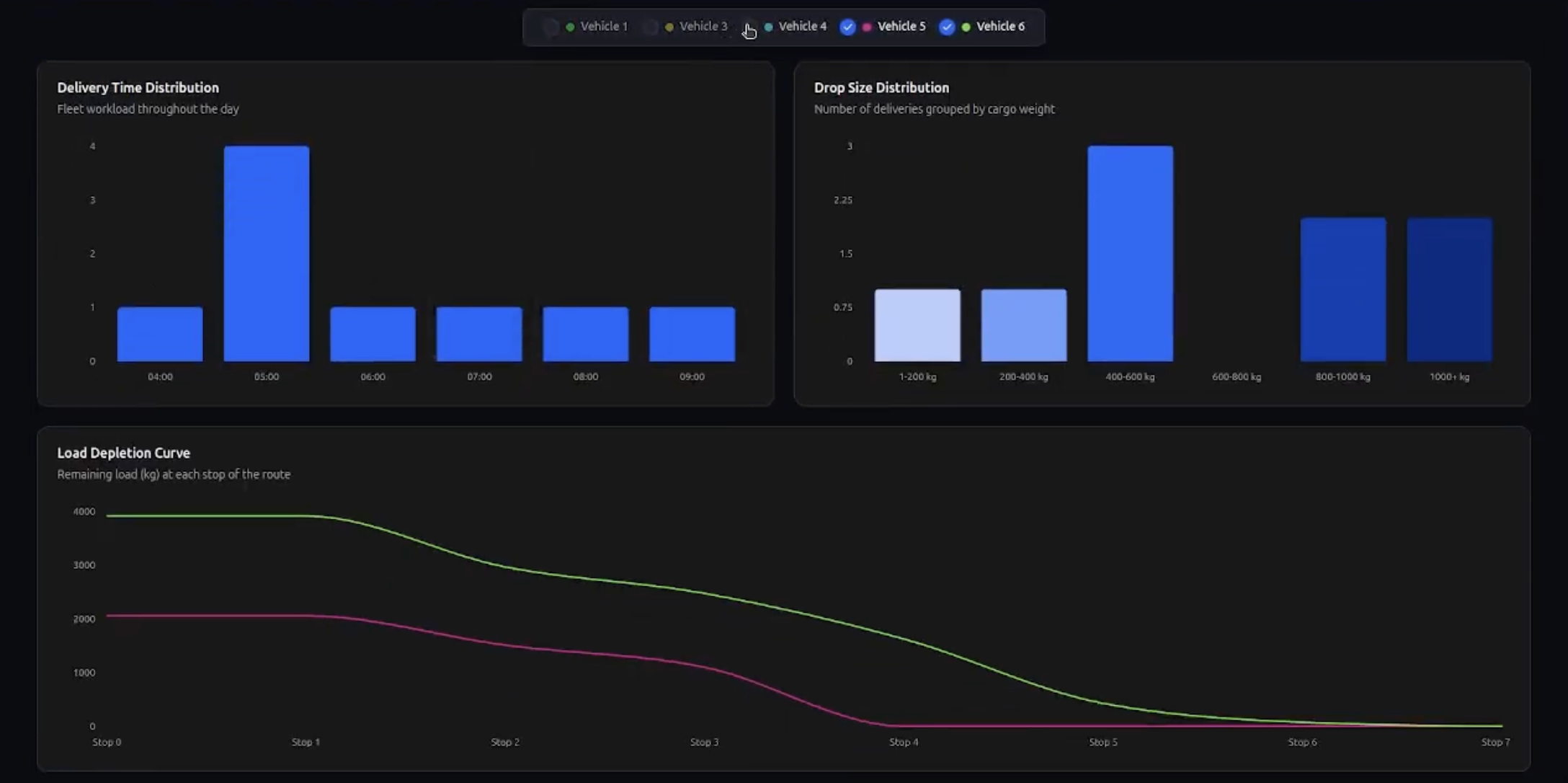
That is where ElifTech brings value in this partnership. ElifTech builds bespoke logistics and last-mile software, including routing solutions, driver apps, orchestration layers, and custom delivery workflows. This means the company does not simply connect to a geocoder. It applies better location data where it has the greatest operational impact: in route planning, delivery execution, and the driver experience.
Naurt improves the accuracy of the final part of the journey. ElifTech turns that data into practical workflow improvements inside the tools delivery teams already use. Together, this makes it possible to enhance real-world routing decisions, reduce last-mile friction, and support more efficient delivery operations without rebuilding the entire system from scratch.
.png)

.png)
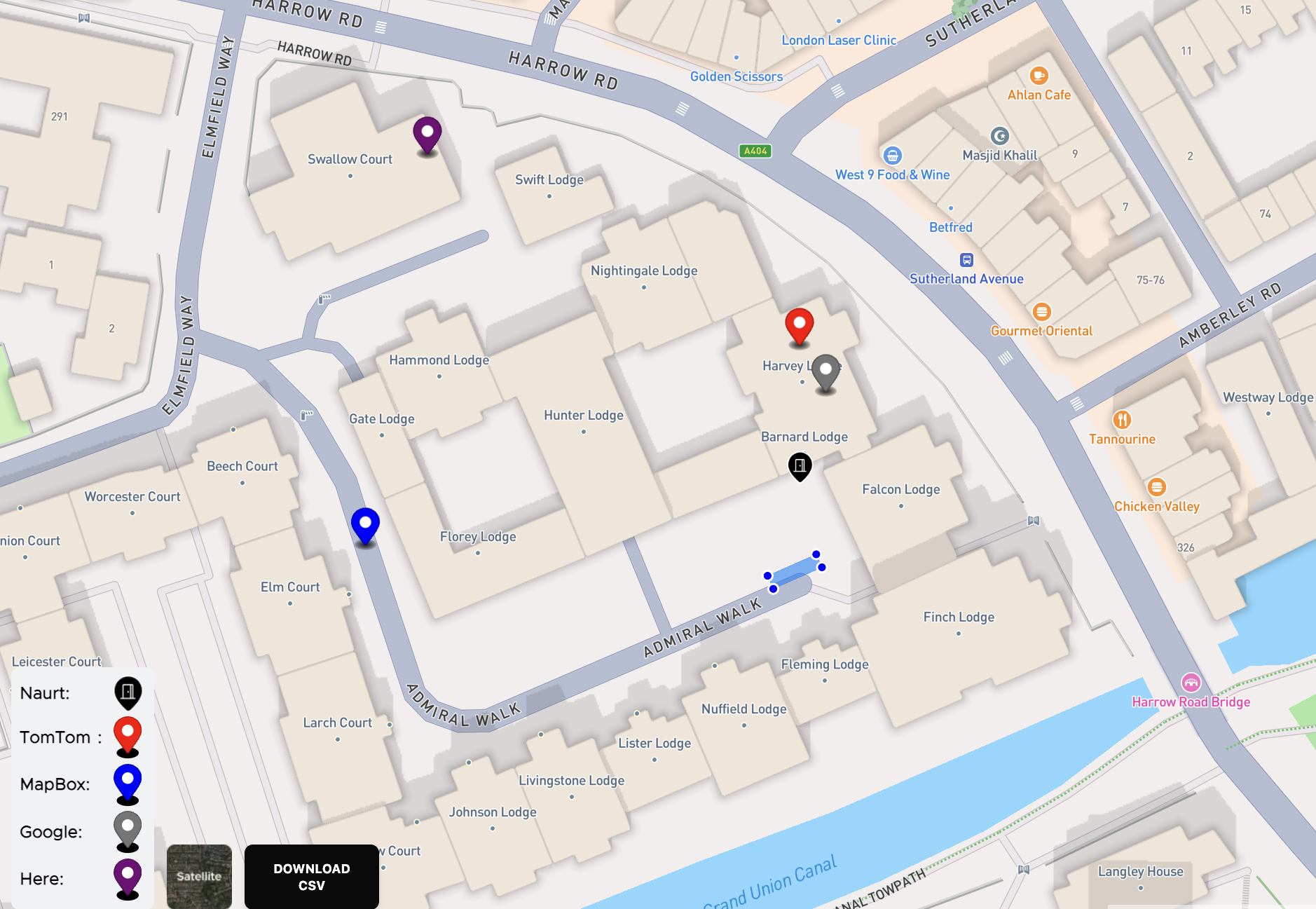
One of the most useful ways to assess location quality is simple.
Take historical delivery jobs. Use the previous successful delivery location as the ground truth. Then compare how close each geocoder gets to that real-world point across a sample of addresses.
That is a more useful test than asking whether a map point “looks about right”.
For delivery teams, the real question is not whether a geocoder found the address. The real question is whether it gets the driver closer to the actual place where the parcel should be delivered.
That is the standard Naurt and ElifTech are focused on.
When the address point is more useful operationally, the gains show up in several places:
This lines up with the wider market. The Europe 2025 report makes clear that last-mile leaders are trying to cut costs without hurting service, and that smarter routing is one of the main ways they are doing it.
Better routing, though, depends on better location inputs. If the geocoder is weak at the final delivery point, even the best routing logic is working with incomplete information.
Naurt and ElifTech are solving two parts of the same problem.
Naurt helps answer: where should the driver actually go?
ElifTech helps answer: how should that information fit into the delivery workflow?
Together, that creates a stronger last-mile stack for teams that need more than generic mapping.
For delivery operators, retailers, and logistics platforms, this means a practical way to improve last-mile efficiency without rebuilding everything from scratch. Better geocoding can be introduced into existing workflows, then used inside the routing, driver, and orchestration layers that ElifTech builds.
The last mile is no longer just about getting close enough. It is about getting the final approach right.
Generic maps were not designed to solve that problem for couriers. Delivery teams need data that reflects how deliveries happen in the real world: where to stop, where to enter, and how to complete the job with less friction.
That is the gap Naurt and ElifTech are working to close.
And in a market where cost control, reliability, and customer expectations are all rising at once, that final layer of accuracy can make a real difference.

Sign up at Naurt for product updates, and stay in the loop!


